Imagine all the people Sharing all the world

6/5/11

Rasta beads and accessories

Black, gold, red and green are the colors of the Jamaican rasta represented. The beads in the colors of pearls are known as Rasta. These pearls are often used Rasta earrings with shells and become accessories such as necklaces, bracelets, rings, cufflinks. Sometimes, hair accessories such as jewelry are also available Rasta. Many people, as these elements contribute because they are fashionable, trendy and affordable. In addition,if someone buys accessories Rasta culture, participates in the celebration of Black Art He can use the accessories as souvenirs to commemorate Black History Month.

However, sells handmade accessories Rasta, is a great way to earn extra money. If you're really good, you can also make your small business into your main means of livelihood. You can buy wholesale beads Rasta, even if you do not, and you can buy accessories to make it good.You only need your creativity to come up with beautiful designs, and use your hands the ball on a string rasta. All you need are wire jewelry, crimping pliers, wire cutting or scissors, and of course pearls Rasta. You can also add some sea shells. In no time, simply Rasta Rasta Beads will be fabulous accessories. Consider more necklaces and earrings, but because they are better than selling braceletsAnkle.

Rasta

Once done creating a lot of accessories Rasta, you can take it to a consignment shop. consignment shops are often in search of beautiful, handmade accessories. So if you think your accessories Rasta are good enough to sell, so you can shop owner if they would be willing to buy your products. If one or more of them, agree to order from you, you have a regular source of income. You do not even worry about what's going on SalesRecord of daily life, because it is already finished to customers. However, this does not mean that we do not sell retail accessories Rasta more. You can still have a website or participate in craft fairs and exhibitions from time to time to sell your products. The more pieces you sell, the more popular they will become customers.

Also remember that you never create and give business cards. Make sure your contact information is on the cards. You can also ask your friends orThe relatives if they know other people who might want to order accessories for her. Ask the district to find out if you like beads Rasta. Then try to run ads on bulletin boards in public so everyone know about your business. The more people on your Rasta Rasta Beads and accessories, customers can more and more you receive.

Rasta beads and accessories
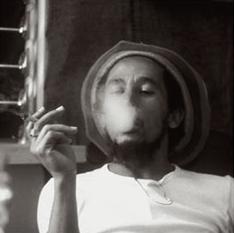
1/16/11

What is Rastafarian ?


The Rastafari movement or Rasta is a monotheistic, new religious movement that arose in a Christian culture in Jamaica in the 1930s.[1][2] Its adherents worship Haile Selassie I of Ethiopia, former Emperor of Ethiopia (1930–1936 and 1941–1974), as God incarnate, the Second Advent, and are known as Rastafarians, or Rastas. The movement is sometimes referred to as "Rastafarianism", but this term is considered derogatory and offensive by some Rastas, who dislike being labelled as an "ism".
The Rastafari movement encompasses themes such as the spiritual use of cannabisand the rejection of western society, called Babylon (from the metaphorical Babylon of the Christian New Testament.) It proclaims Africa (also "Zion") as the original birthplace of mankind, and embraces various Afrocentric social and political aspirations, such as the sociopolitical views and teachings of Jamaican publicist, organizer, and black nationalist Marcus Garvey (also often regarded as a prophet).
Rastafari is not a highly organized religion; it is a movement and an ideology. Many Rastas say that it is not a "religion" at all, but a "Way of Life”  Most Rastas do not claim any sect or denomination, and thus encourage one another to find faith and inspiration within themselves, although some do identify strongly with one of the "mansions of Rastafari" — the three most prominent of these being the Nyahbinghi, the Bobo Ashanti and the Twelve Tribes of Israel.
The name Rastafari is taken from Ras Tafari, the pre-regnal title of Haile Selassie I, composed of Amharic Ras (literally "Head," an Ethiopian title equivalent to Duke), and Haile Selassie's pre-regnal given name, Tafari. Rastafari are generally distinguished for asserting the doctrine that Haile Selassie I, the former and final Emperor of Ethiopia, is another incarnation of the Christian God, called Jah They see Haile Selassie I as Jah or Jah Rastafari, who is the second coming of Jesus Christ onto the Earth.
Today, awareness of the Rastafari movement has spread throughout much of the world, largely through interest generated by reggae music. The most notable example is Jamaican singer/songwriter Bob Marley (died 1981). By 1997, there were around one million Rastafari faithful worldwide In the 2001 Jamaican census, 24,020 individuals (less than 1 percent of the population) identified themselves as Rastafarians  Other sources have estimated that, in the 2000s, they formed "about 5 percent of the population" of Jamaica, or have conjectured that "there are perhaps as many as 100,000 Rastafarians in Jamaica".